1. Home
  2. Resources
  3. Hospital Discharge Checklist: Bringing a Loved One...
Post-Surgical

Hospital Discharge Checklist: Bringing a Loved One Home Safely

Hospital Discharge Checklist: Bringing a Loved One Home Safely

Discharge day is a relief — and a scramble. Papers are signed quickly, instructions come fast, and the questions you don't think to ask at the hospital become problems at nine o'clock that night at home. At NW Private Nurse Partners we spend a lot of our time in homes during the days right after a hospital stay, and the difference between a smooth first week and a chaotic one usually comes down to what was in place before the car left the hospital parking lot. This checklist is what we'd want for our own families.

Before You Leave the Hospital

Do not head for the elevator until you can check off every item below. Discharge staff expect these questions — ask them.

  • Discharge summary in hand. Get a printed copy of the discharge instructions and, if possible, the discharge summary itself. Don't rely on the patient portal being populated by tonight.
  • A reconciled medication list. Which home medications continue, which are stopped, which are new, and which doses changed. Hospital stays almost always change the medication picture; the list on the fridge at home is now wrong.
  • New prescriptions actually obtainable. Confirm the prescriptions were sent to a pharmacy that's open today and has the medication in stock. Pain medication gaps on the first night home are a miserable, avoidable emergency.
  • Follow-up appointments scheduled — or at least named. Who needs to be seen, and within how many days? Write down the target windows before you leave.
  • Warning signs, specifically. Ask: "For this patient and this condition, what exact symptoms should make us call — and whom do we call, at night and on weekends?" Get names and numbers, not "call the office."
  • Equipment and supplies. Walker, commode, wound care supplies, oxygen, compression stockings — is everything either coming home with you or being delivered, and does someone know how to use it?
  • Activity and diet restrictions. Weight-bearing limits, lifting limits, driving, showering with an incision, dietary rules. Have them repeated until they're concrete.

The First 24 Hours at Home

  • Set up the medications first. Before fatigue wins, lay out the new regimen — a pill organizer, an alarm schedule, and the old, now-incorrect bottles moved out of reach.
  • Prepare the recovery space. Sleeping arrangements on one floor if stairs are hard, a clear path to the bathroom, night lighting, phone within reach.
  • Plan the first night. Someone should be in the home overnight for at least the first night or two after a significant stay. Confusion, falls, and breathing trouble show up at night.
  • Watch quietly. Appetite, alertness, breathing, pain control. You're establishing what "normal" looks like so you'll notice a change.

The First Week

  • Keep the follow-up appointment — even if things are going well. Especially if things are going well; medications often need adjusting based on how the first days went.
  • Know your red flags cold. Fever, wound changes, new confusion, worsening breathing, swelling — our guide to recognizing warning signs breaks down what needs 911, what needs a same-day call, and what can wait.
  • Track the details. A simple notebook — temperatures, weights, pain scores, questions as they come up — turns the follow-up visit from vague reassurance into a real review.
  • Mind the caregiver too. The first week home is exhausting for the family. Line up relief before you need it.

Where a Home Nursing Visit Fits

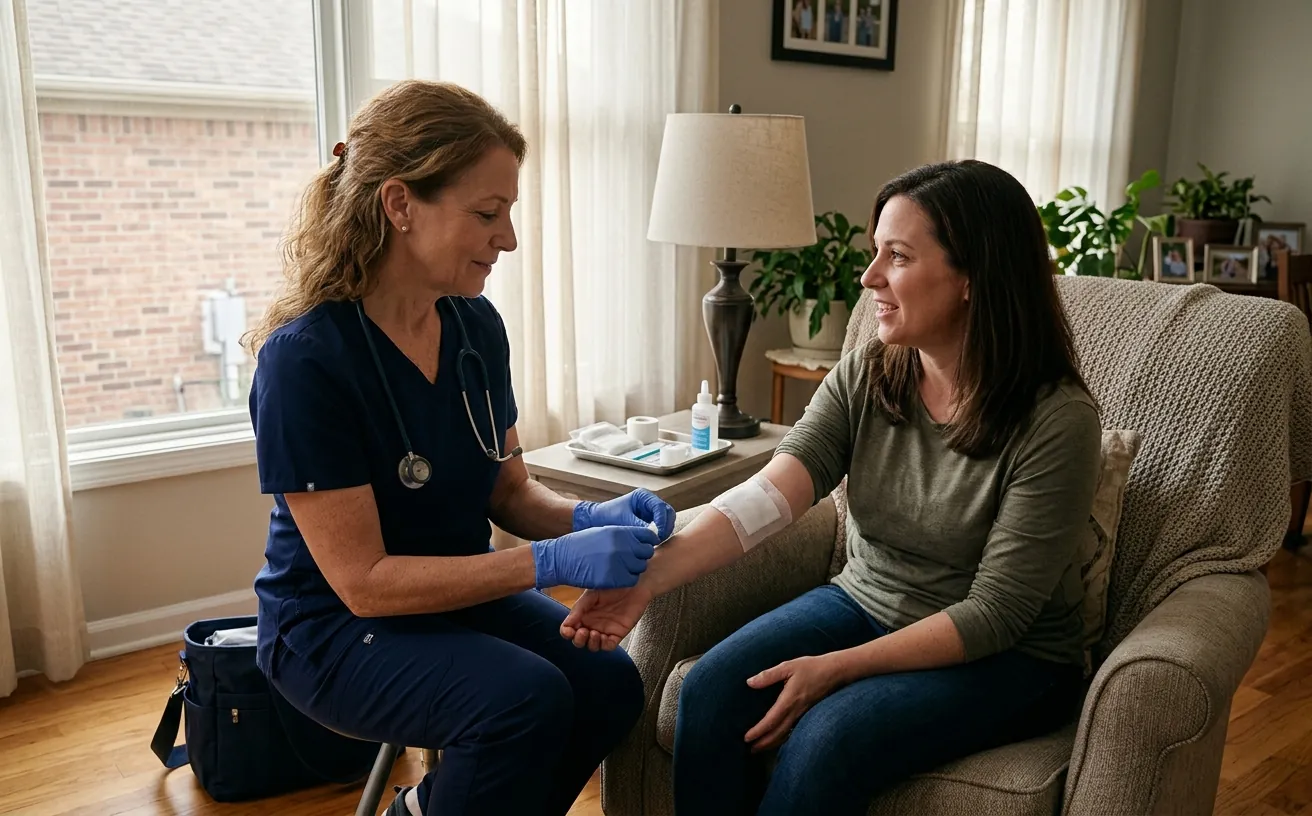
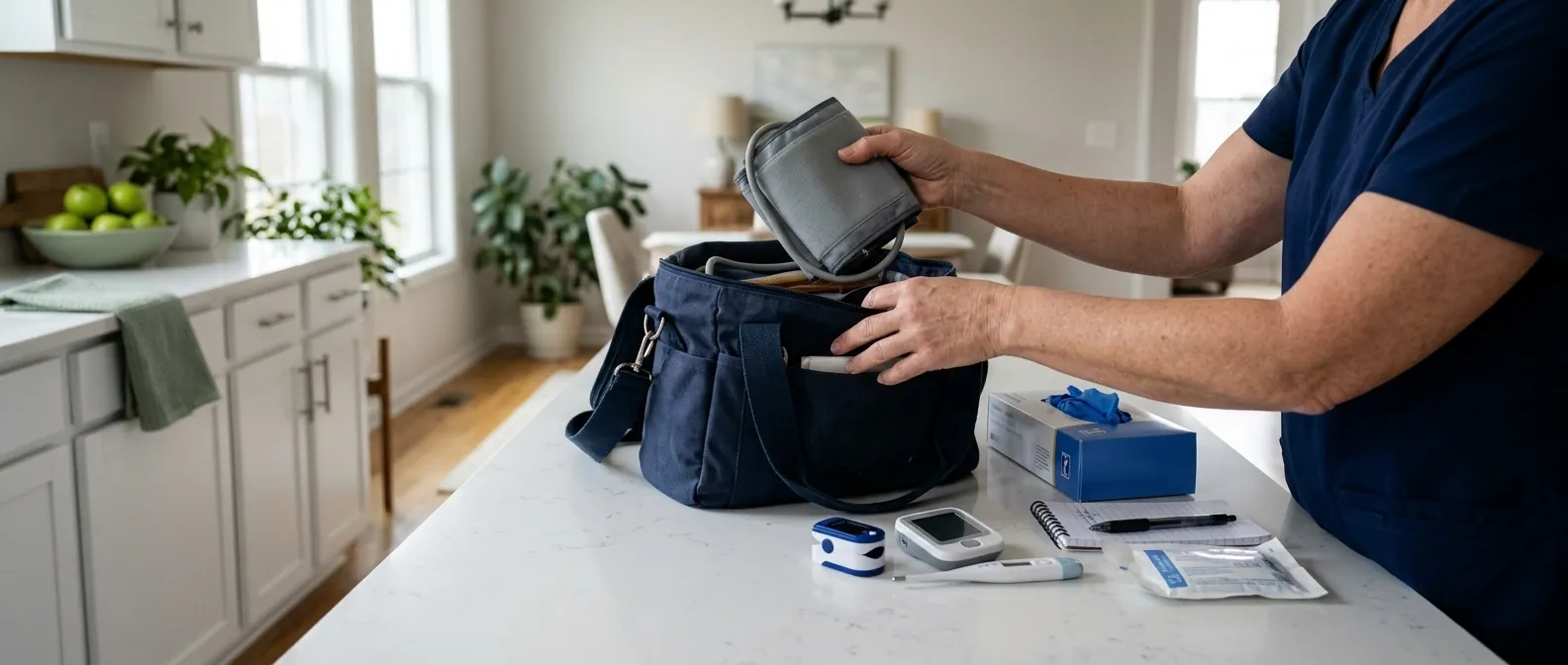
The highest-risk window after a hospital stay is the first 48–72 hours — short stays and fast discharges mean patients routinely come home before anyone has watched how they actually do outside a hospital bed. A single visit from a registered nurse in that window covers the whole checklist above with clinical eyes: medications reconciled against the discharge summary, vital signs and lungs actually assessed, the wound looked at, the home walked for fall risks, and the family taught the specific warning signs that matter for this diagnosis. (Recovering from surgery specifically? See post-surgical care at home.)

NW Private Nurse Partners visits are booked directly — no physician order needed — at a flat price with travel included, anywhere in our Chicagoland service area.

"Hospitals discharge patients when they're stable, not when they're safe at home. Those are different finish lines, and the space between them is exactly where a home visit belongs."
— Sue Volpe, RN

Bringing someone home this week? Book a discharge-week visit or call (224) 506-8600 and we'll help you time it right.

Filed under: Post-Surgical
Share:

You Might Also Like

Ready for personalized care at home?

Book a visit with Sue and experience the difference of concierge home nursing.

Call Book a Visit